

 English
 Español
 عربى
عربى Tiếng Việt
NEWS

Industry
 By Admin
Anti-Slip Elastic Band: Securing Fit For Modern Yoga Practices
Mesh Elastic Band and Anti-Slip Elastic Band are increasingly used in yoga wear and fitness accessories where a stable fit and controlled movement matter. In modern yoga practices that involve stretching, balance transitions, and floor-based poses, these two elastic structures are often selected to reduce garment shifting and keep materials in place during motion.
Fit Stability in Yoga Movement
Yoga routines often include continuous posture changes, such as downward dog, plank variations, twisting sequences, and seated stretches. During these movements, clothing or support accessories can shift due to repeated tension and release. This is where elastic components become relevant, particularly in waistband structures, straps, and supportive bands integrated into apparel or fitness gear.
Traditional elastic materials may provide stretch, but they can sometimes roll, loosen over time, or create uneven pressure across the body. In practice environments where users focus on breath and alignment, constant adjustment of clothing can interrupt concentration. Mesh-based elastic structures and anti-slip designs have been developed to address these practical issues by improving surface grip and airflow distribution, while maintaining stretch consistency.
Structural Approach and Material Adjustments
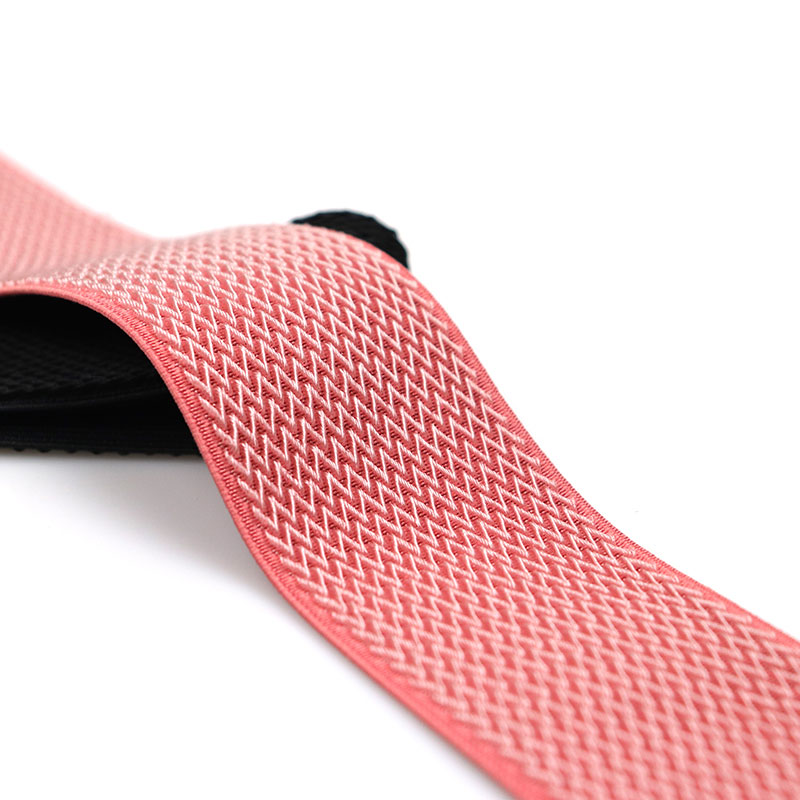
Mesh Elastic Band designs typically rely on a breathable grid-like structure. This allows air circulation and reduces heat accumulation during extended activity. The mesh pattern also distributes tension across multiple points rather than concentrating it in a single line. As a result, the band can maintain shape during repeated stretching cycles without becoming overly tight in specific areas.
Anti-Slip Elastic Band structures, on the other hand, incorporate surface texture adjustments such as silicone lines, micro-patterned grips, or inner friction zones. These features are positioned on contact areas to help reduce movement between fabric layers or between skin and material surfaces. Instead of relying solely on tightness, the design focuses on controlled resistance to sliding.
In many current designs, both concepts are combined. A mesh base provides breathability and flexibility, while anti-slip elements are integrated at key tension points. This combination allows the band to respond differently depending on movement intensity and direction, making it suitable for varied yoga styles ranging from slow restorative sequences to dynamic flows.
Usage in Yoga and Fitness Environments
In yoga apparel, these elastic bands are often placed around waistlines, under-bust areas, leggings hems, or shoulder straps. Their role is not limited to clothing; they are also used in yoga mats straps, resistance accessories, and carrying supports.
Typical usage scenarios include:
- Holding leggings in position during inversion poses
- Keeping sports tops stable during arm extension movements
- Securing yoga mats during transport without slippage
- Supporting light resistance training movements where grip consistency is required
The integration of mesh and anti-slip structures allows users to focus on posture transitions without frequent readjustment. This is particularly noticeable in longer sessions where repeated movement may otherwise cause gradual displacement of equipment or apparel.
Performance Observation from Practice Use
In controlled wear tests and usage observation scenarios, garments using mesh elastic structures showed more consistent tension distribution after repeated stretching cycles compared to standard elastic strips. The surface remained more stable during lateral movement, especially in twisting postures.
Anti-slip components demonstrated noticeable reduction in fabric movement along contact zones, particularly in high-mobility poses such as lunges or bridge variations. In multi-session use, the grip elements maintained their texture without significant flattening, although long-term performance can vary depending on washing conditions and material composition.
In a sample yoga class setting involving 20 participants over a 4-week period, users reported fewer interruptions caused by clothing adjustment when using apparel integrated with mesh and anti-slip elastic structures. The observations were qualitative, focusing on movement comfort and stability perception rather than numerical performance metrics.
Broader Application Across Wearable Design
Beyond yoga, these elastic structures are also used in running apparel, dancewear, and rehabilitation garments. In each case, the requirement is similar: maintaining position during repetitive or wide-range motion.
Mesh Elastic Band structures are particularly suitable in environments where airflow and reduced heat retention are important. Anti-Slip Elastic Band designs are more commonly applied in areas where directional movement and grip control are needed, such as joint support zones or high-motion garment edges.
Designers often combine both elements to adapt to hybrid activity patterns, where users shift between static and dynamic movements within a single session.
Industry Perspective on Functional Textile Development
The use of structured elastic systems reflects a broader trend in functional textiles, where material behavior is designed in response to movement patterns rather than static fit alone. Instead of relying solely on tighter construction, modern approaches focus on how fabric interacts with the body during motion cycles.
This shift has influenced how sportswear and wellness apparel are developed. Material engineers consider airflow, friction points, and tension mapping when designing elastic components. Mesh structures contribute to spatial flexibility, while anti-slip treatments address micro-movement control.
As consumer activity patterns diversify, especially in home-based fitness and mixed-discipline training, demand for adaptable elastic solutions continues to expand across apparel categories.

-
Tel:
+86-18767935551
+86-18395959909
+86-18767935551
-
Email:
saijia@sjelasticband.com
claiejin@sjelasticband.com
luffy@sjelasticband.com
-
ADD:
3F, Building 6, No.151, Huasheng Road, niansanli Street, Yiwu City, Jinhua City, Zhejiang Province, China.
LEAVE A REQUEST
AND WE'L CONTANT YOU.
AND WE'L CONTANT YOU.
Copyright © Yiwu Saijia Garment Accessories Co., Ltd. All rights reserved.
Custom Elastic Bands
