

 English
 Español
 عربى
عربى Tiếng Việt
NEWS

Industry
 By Admin
How Can Mesh Elastic Band Support Travel Packing Efficiency
Packing for travel often involves balancing limited space with clothing that stays organized during movement and storage. Mesh Elastic Band and Anti-Slip Elastic Band are increasingly used in travel-oriented textile and accessory design to help maintain garment structure while supporting more orderly packing habits. Their role is not limited to wearing comfort; they also influence how clothing behaves when folded, compressed, and unpacked across different stages of travel.
Packing Challenges in Modern Travel Habits
Travel packing is no longer only about fitting items into luggage. Frequent movement, multiple stops, and varied climates mean that clothing is often packed, unpacked, and rearranged several times during a single trip. In this process, elastic components in garments play a subtle but important role in how items retain shape and occupy space.
Traditional elastic bands, while useful for stretch and fit, can sometimes create uneven folding patterns. Thick or rigid elastic zones may cause bulk in luggage, making stacking less efficient. In addition, garments with unstable elastic sections may shift inside packing cubes or bags, causing disorganized layouts when luggage is reopened.
Another common issue is post-unpacking reshaping. Clothing that loses its original structure during compression may require additional adjustment before use, which can affect time efficiency during travel routines.
Structural Adjustments in Mesh Elastic and Anti-Slip Integration
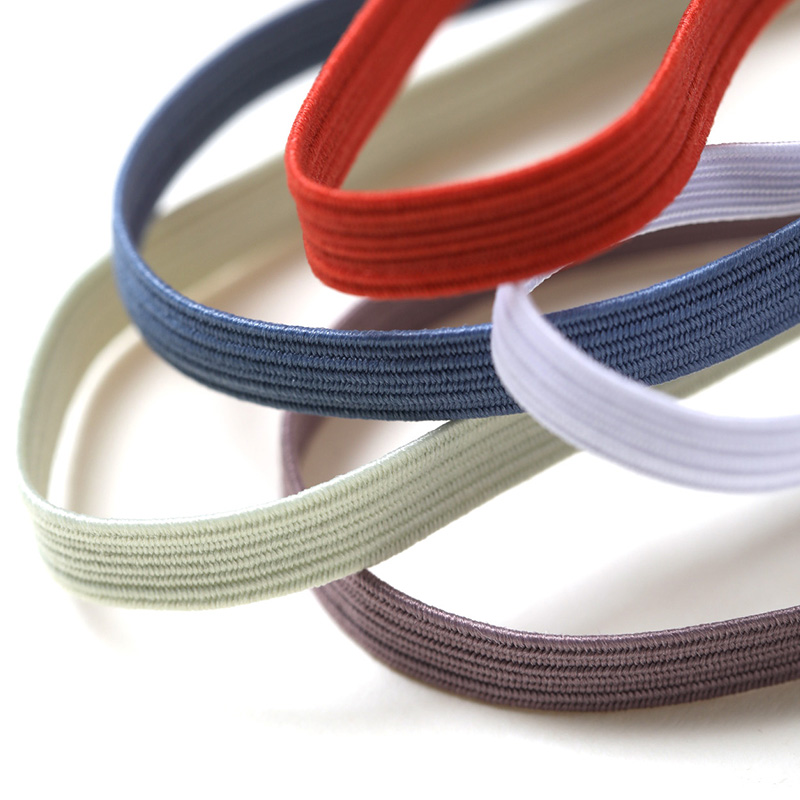
Mesh Elastic Band structures introduce a lighter framework into elastic zones by using a ventilated, grid-like construction. This design reduces bulk in folded garments, allowing them to lay flatter during packing. Instead of relying on dense elastic strips, the mesh structure distributes tension across multiple points, which helps garments maintain a more stable folded form.
Anti-Slip Elastic Band elements contribute to this system by reducing internal shifting when clothing is packed tightly together. In travel scenarios where items are stacked or compressed, anti-slip zones help keep fabrics aligned rather than sliding against each other.
Key structural adjustments include:
- Low-profile mesh framework: supports flatter folding behavior
- Distributed tension layout: reduces concentrated bulk in elastic areas
- Surface grip zones: limit fabric displacement during compression
- Flexible recovery structure: supports shape retention after unpacking
- Segmented elasticity: adapts to varied packing pressure levels
|
Design Feature |
Function in Travel Packing |
|
Mesh elastic structure |
Reduces bulk in folded clothing |
|
Anti-slip surface zones |
Limits shifting inside luggage |
|
Elastic distribution |
Supports stable compression during packing |
|
Lightweight construction |
Helps maintain compact folding shape |
|
Recovery behavior |
Assists garment reshaping after unpacking |
These elements work together to influence how garments behave before, during, and after packing rather than focusing only on wear-time performance.
Practical Use in Travel-Oriented Clothing and Accessories
Mesh Elastic Band systems are commonly applied in travel clothing such as lightweight trousers, foldable jackets, and casual tops designed for compact packing. Their structure allows garments to be compressed into smaller spaces without creating excessive ridge lines or uneven folds caused by thick elastic sections.
Anti-Slip Elastic Band components are often used in inner layers or multifunctional travel apparel where clothing is stacked or layered inside luggage. These zones help reduce movement between garments, especially when bags are carried over long distances or exposed to frequent handling.
In packing accessories such as compression bags or clothing organizers, similar structural principles are applied to maintain item alignment. While not all travel products use identical materials, the design logic remains consistent: controlling movement inside confined space while maintaining a manageable shape for unpacking.
Observed Packing Behavior and Use Patterns
Practical observations from travel packing scenarios show that elastic structure influences not only how much can be packed but also how organized items remain during transit. Mesh-based elastic zones tend to create more uniform folding lines, which helps clothing stack more predictably in luggage compartments.
Some recurring use patterns include:
- Clothing with mesh elastic waistbands tends to flatten more evenly in packing cubes
- Anti-slip zones reduce internal shifting when luggage is moved or rotated
- Garments maintain clearer separation when layered in tight packing conditions
- Post-travel unpacking requires less reshaping in structured elastic garments
Packing Behavior Overview
|
Clothing Structure Type |
Folding Stability |
Space Behavior |
Post-Unpack Shape |
|
Traditional elastic zones |
Moderate |
Bulk variation |
Requires adjustment |
|
Mesh Elastic Band |
More uniform |
Flatter compression |
Partial retention |
|
Anti-Slip Elastic Band |
Stable positioning |
Reduced shifting |
More consistent |
|
Combined structure |
Balanced control |
Organized stacking |
Faster recovery |
These observations are based on general packing behavior across common luggage conditions rather than controlled laboratory settings.
Application Scenarios in Travel Systems
Mesh Elastic Band and Anti-Slip Elastic Band structures are applied in a variety of travel-related clothing categories. In short-term business travel, garments need to maintain a clean fold pattern while being unpacked and repacked frequently. Mesh elastic components help reduce uneven folding lines that may occur after compression.
For long-distance travel, where luggage is handled multiple times, anti-slip structures help maintain internal organization by reducing fabric displacement inside bags. This is particularly useful when clothing is mixed with accessories or layered storage systems.
In outdoor travel scenarios such as hiking or camping trips, clothing often undergoes repeated folding and compression. Mesh-based elastic zones help reduce bulk accumulation in key areas like waistbands and cuffs, which contributes to more consistent packing distribution.

-
Tel:
+86-18767935551
+86-18395959909
+86-18767935551
-
Email:
saijia@sjelasticband.com
claiejin@sjelasticband.com
luffy@sjelasticband.com
-
ADD:
3F, Building 6, No.151, Huasheng Road, niansanli Street, Yiwu City, Jinhua City, Zhejiang Province, China.
LEAVE A REQUEST
AND WE'L CONTANT YOU.
AND WE'L CONTANT YOU.
Copyright © Yiwu Saijia Garment Accessories Co., Ltd. All rights reserved.
Custom Elastic Bands
