

 English
 Español
 عربى
 Tiếng Việt
NEWS

Industry
 By Admin
Anti-Slip Elastic Band Performance in Sportswear and Activewear Manufacturing
Sportswear manufacturers face a recurring challenge when designing garments that need to stay in position during running, cycling, training, and other physical activities. Waistbands, leg openings, bra bands, and fitted garment edges may shift when exposed to repeated movement and fabric tension. Anti-Slip Elastic Band provides an additional grip function that helps reduce unwanted displacement while maintaining the flexibility required for activewear. For textile buyers and garment factories, selecting suitable materials means considering surface design, stretch recovery, washing resistance, and compatibility with different fabrics.
Reducing Garment Movement During Physical Activity
Garment movement can affect both wearing comfort and product performance. When waistbands roll down or leg openings gradually shift, users may need to adjust their clothing during exercise.
This problem is often related to the combination of elastic tension, garment construction, and surface friction. Simply increasing elastic tension is not always an appropriate solution because excessive pressure may affect comfort.
An elastic band with a suitable grip surface can provide additional contact between the garment and the intended wearing area. This makes it a useful option for sportswear designs that require stable positioning.
Grip Structures for Different Activewear Designs
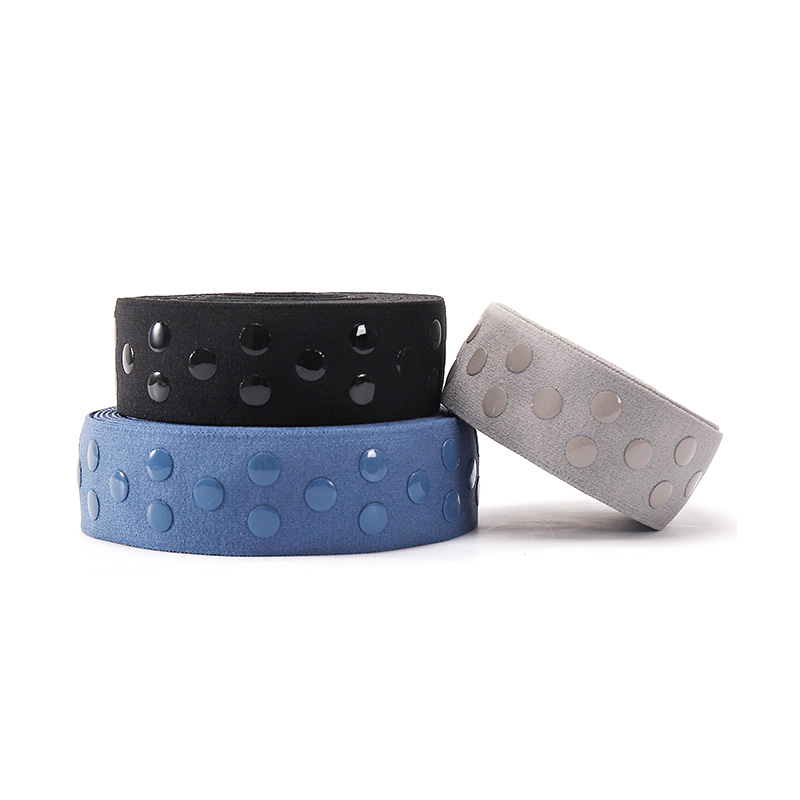
The surface structure determines how an elastic band interacts with the surrounding fabric or skin. Silicone printing is a common approach for creating additional friction without significantly changing the basic function of the elastic base.
Different designs can be considered according to application requirements:
- Silicone lines: Suitable for designs requiring continuous grip along selected areas.
- Dot patterns: Provide distributed contact points while maintaining flexibility.
- Custom patterns: Allow garment manufacturers to coordinate grip placement with specific construction details.
Pattern selection should consider the contact area, fabric texture, and required flexibility rather than appearance alone.
Balancing Grip with Stretch and Recovery
Activewear materials undergo frequent extension during exercise. An elastic component must therefore maintain its flexibility while providing sufficient grip.
If the material becomes too rigid after silicone application, it may affect garment movement or sewing operations. If its recovery is insufficient, the finished garment may gradually lose its original fit.
During product development, we recommend evaluating stretchability, recovery, surface adhesion, and flexibility together. This helps buyers identify potential problems before confirming production specifications.
Fabric Compatibility in Sportswear Production
Activewear can incorporate polyester, nylon, spandex blends, and various knitted structures. These fabrics have different surface characteristics, which can influence how an anti-slip elastic band performs after installation.
For example, lightweight stretch fabrics may require a flexible elastic structure, while thicker garment materials may need different dimensions or tension settings.
When evaluating samples, buyers should test the elastic with the actual fabric whenever possible. This provides a more realistic assessment of sewing compatibility, grip performance, and finished-garment appearance.
Washing Resistance and Silicone Adhesion
Sportswear is frequently washed after use, making coating durability an important purchasing consideration. Poor silicone adhesion may lead to peeling, cracking, or uneven surface changes after repeated washing and stretching.
As a manufacturer, we recommend checking several aspects during sample evaluation:
- Whether the silicone remains firmly attached to the elastic base.
- Whether the grip pattern changes after stretching.
- Whether the surface maintains its original appearance after washing.
- Whether the elastic retains suitable recovery performance.
These inspections help garment factories assess material suitability for their intended product range.
Custom Specifications for Activewear Manufacturers
Different sportswear collections have different design and production requirements. Buyers may need customized widths, colors, elastic compositions, silicone patterns, and surface coverage.
Before requesting a quotation, it is useful to provide the intended garment type, fabric composition, required dimensions, and expected application conditions. Reference samples or technical drawings can also help manufacturers understand the required construction.
Clear specifications make sample development more efficient and help reduce unnecessary adjustments during bulk purchasing.
Supporting Reliable Activewear Production
Choosing elastic materials for sportswear requires more than checking whether the surface feels sticky. Buyers need to evaluate grip, flexibility, recovery, coating adhesion, and fabric compatibility as part of the same process.
As a manufacturer, we focus on matching product construction with actual garment requirements and maintaining consistency throughout production. With appropriate material selection and sample testing, Anti-Slip Elastic Band can support sportswear applications that require stable positioning, comfortable movement, and dependable performance.

-
Tel:
+86-18767935551
+86-18395959909
+86-18767935551
-
Email:
saijia@sjelasticband.com
claiejin@sjelasticband.com
luffy@sjelasticband.com
-
ADD:
3F, Building 6, No.151, Huasheng Road, niansanli Street, Yiwu City, Jinhua City, Zhejiang Province, China.
LEAVE A REQUEST
AND WE'L CONTANT YOU.
AND WE'L CONTANT YOU.
Copyright © Yiwu Saijia Garment Accessories Co., Ltd. All rights reserved.
Custom Elastic Bands
