

 English
 Español
 عربى
 Tiếng Việt
NEWS

Industry
 By Admin
Selecting Anti-Slip Elastic Band for Reliable Grip and Consistent Garment Performance
Anti-Slip Elastic Band plays an important role in keeping garments securely positioned during daily wear, particularly in products where movement, fabric contact, and repeated stretching can affect fit. For apparel manufacturers and textile sourcing companies, choosing the right elastic band involves more than checking its width or stretchability. Surface friction, elastic recovery, material compatibility, and production consistency all influence the finished product. As a manufacturer, we focus on these practical details to help buyers reduce slipping complaints and maintain consistent product quality across bulk orders.
Common Causes of Elastic Band Slippage
Elastic bands may gradually move out of position when their surface does not provide sufficient contact with the surrounding fabric or skin. This issue can occur in sportswear, underwear, waistbands, socks, and other fitted textile products.
Several factors can contribute to poor grip:
- Insufficient surface friction: A smooth elastic surface may not hold its position during physical activity.
- Inappropriate tension: Excessive or insufficient elasticity can affect how the band fits.
- Fabric incompatibility: Different fabric textures may influence the contact between the elastic and garment.
- Repeated washing: Material performance and surface characteristics should be considered throughout regular garment use.
Understanding these factors helps purchasing teams identify suitable elastic materials before moving into mass production.
Surface Design and Grip Performance
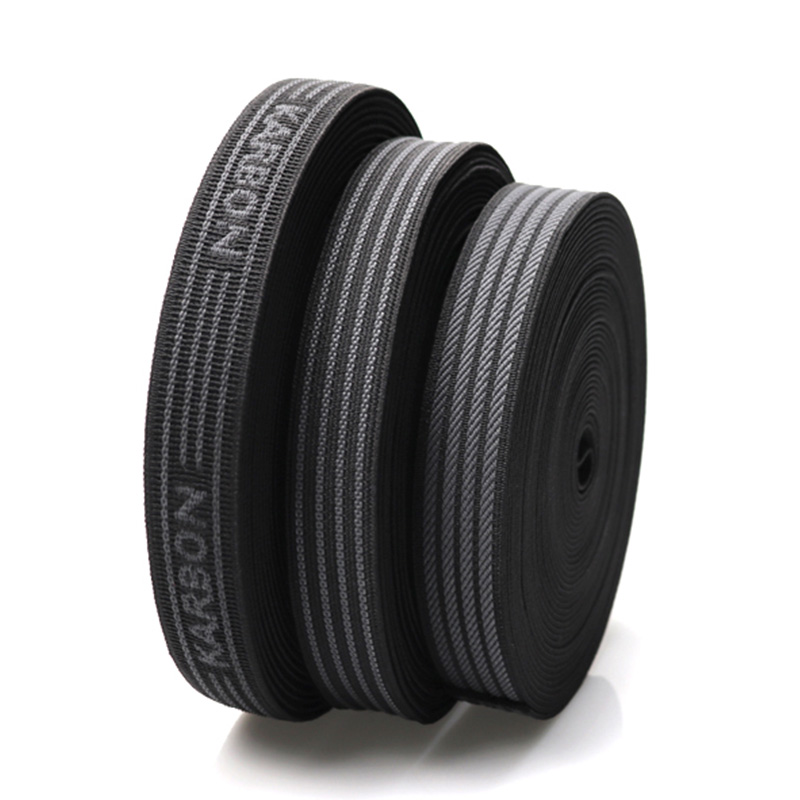
The surface structure of an Anti-Slip Elastic Band directly affects how it interacts with other materials. Depending on the intended application, manufacturers may use silicone elements, textured surfaces, or other grip-enhancing designs to reduce unwanted movement.
Silicone grip patterns are commonly considered for sportswear and fitted garments because they provide additional friction at contact points. However, the pattern, coverage, and placement need to match the garment structure.
During product development, we recommend evaluating the grip surface together with the target fabric rather than selecting an elastic band based on appearance alone.
Balancing Elasticity and Wearing Comfort
Grip performance should not come at the expense of comfort. An elastic band that applies excessive pressure may create discomfort, while insufficient tension can cause the garment to shift during movement.
For this reason, buyers should consider several performance factors together:
- Stretchability under normal wearing conditions.
- Recovery after repeated stretching.
- Width and thickness compatibility with garment construction.
- Contact pressure and flexibility during movement.
For underwear and activewear manufacturers, maintaining this balance is particularly important because the elastic component directly affects garment fit and wearing experience.
Choosing Materials for Different Applications
Different textile products require different elastic structures. Sportswear waistbands may need reliable grip during exercise, while underwear and lingerie require flexibility and a comfortable skin-contact surface.
Socks, compression garments, and fitted clothing also have specific requirements for stretch and recovery. Buyers should communicate the intended application, fabric composition, target dimensions, and expected wearing conditions when requesting samples.
As a manufacturer, we evaluate these requirements before recommending an appropriate elastic construction. This helps avoid unnecessary sampling and reduces the possibility of selecting materials that do not match the final garment design.
Quality Control During Manufacturing
Consistent production quality is essential for textile buyers managing large orders. Even small variations in elastic width, silicone application, or stretching performance may affect garment assembly and finished-product consistency.
Our manufacturing inspections can focus on several important points:
- Width and dimensional consistency across production batches.
- Uniformity of the grip surface and silicone pattern.
- Stretching and recovery performance.
- Surface appearance and bonding quality.
- Compatibility with the intended sewing and garment production process.
These checks help identify potential material problems before the elastic band enters the customer's production line.
Sampling and Bulk Purchasing Considerations
Before confirming a bulk order, buyers should test samples using their actual garment materials. A simple evaluation can include stretching, repeated movement, washing, and checking whether the elastic maintains its intended position.
It is also useful to confirm customization requirements, including width, color, pattern, material composition, and packaging specifications. Clear communication at the sampling stage helps manufacturers align production with the buyer's technical and commercial requirements.
Reliable Elastic Solutions for Textile Manufacturers
Selecting the right elastic material requires attention to grip, flexibility, recovery, and manufacturing consistency. For apparel brands, garment factories, and wholesale textile suppliers, these details can influence both production efficiency and finished-product quality. As a manufacturer, we understand the importance of matching material construction to actual application requirements. With suitable specifications and sample testing, Anti-Slip Elastic Band can provide a practical solution for garment applications that require secure positioning and dependable elastic performance.

-
Tel:
+86-18767935551
+86-18395959909
+86-18767935551
-
Email:
saijia@sjelasticband.com
claiejin@sjelasticband.com
luffy@sjelasticband.com
-
ADD:
3F, Building 6, No.151, Huasheng Road, niansanli Street, Yiwu City, Jinhua City, Zhejiang Province, China.
LEAVE A REQUEST
AND WE'L CONTANT YOU.
AND WE'L CONTANT YOU.
Copyright © Yiwu Saijia Garment Accessories Co., Ltd. All rights reserved.
Custom Elastic Bands
