

 English
 Español
 عربى
عربى Tiếng Việt
NEWS

Industry
 By Admin
Mesh Elastic Band in Modern Manufacturing: Performance, Comfort, and Consistency for Global Buyers
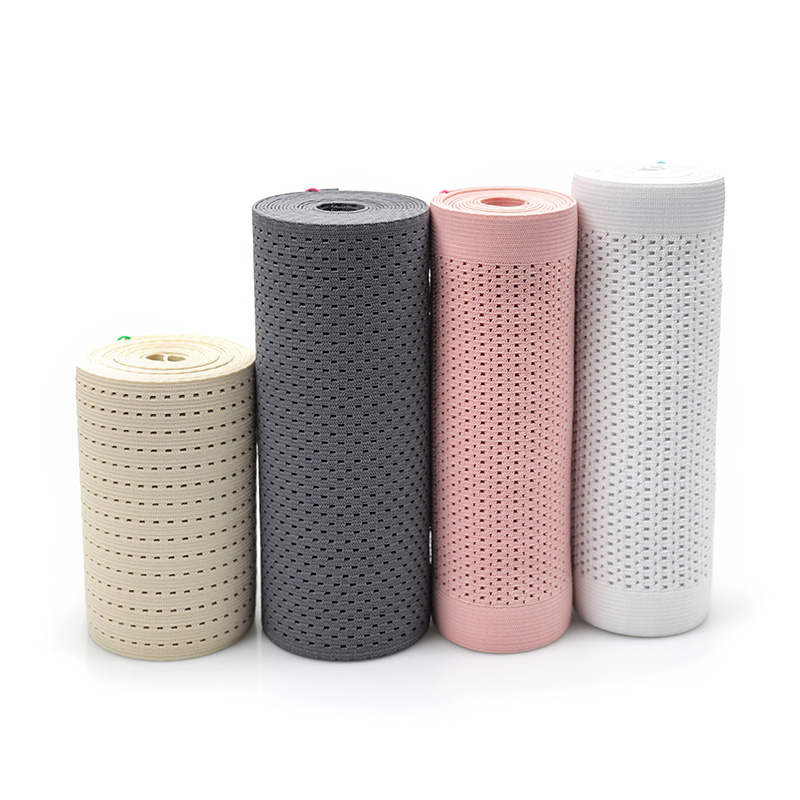
The demand for Mesh Elastic Band has increased steadily across hygiene, medical, and apparel supply chains as overseas buyers prioritize comfort, stability, and cost-efficient production. From disposable face masks and diapers to lightweight garments and protective wear, procurement teams are now searching for elastic solutions that combine breathability with controlled tension. Keywords such as “skin-friendly elastic elastic tape for hygiene products,” “latex-free mesh elastic for diapers,” and “high-recovery elastic band for disposable items” reflect how engineers and sourcing managers evaluate performance beyond simple elasticity. As a manufacturer, we see the shift clearly: buyers are no longer just comparing price—they are solving end-product usability problems.
Rising Procurement Focus on Comfort and Breathability
Across recent sourcing trends, comfort-driven materials are dominating search behavior. Buyers frequently ask for elastic components that reduce skin pressure while maintaining secure fit in long-wear applications. In hygiene and medical disposable categories, a Mesh Elastic Band is often selected because of its open structure, which improves airflow compared to traditional solid elastic. This feature is particularly relevant for baby diapers, adult incontinence products, and protective garments where irritation reduction is a key concern. Engineering teams also evaluate stretch recovery consistency, especially in high-speed converting lines where instability can lead to production waste.
Material Structure and Performance Expectations
From a technical perspective, international buyers now request detailed material transparency. A typical Mesh Elastic Band is engineered with a lightweight filament structure designed to balance elongation and rebound force. Common requirements include stable tension under repeated stretching, low shrinkage after heat sealing, and compatibility with nonwoven substrates. Many procurement specifications also include latex-free composition to meet global sensitivity standards. For manufacturers, ensuring uniform mesh density is essential to avoid weak points that could compromise sealing or stitching processes in downstream production.
Common Production Challenges and Practical Solutions
In real manufacturing environments, several issues frequently appear when integrating elastic materials into high-speed production lines. Edge curling, uneven tension distribution, and slippage during lamination are among the most reported challenges. To address these, converters often adjust heat-setting parameters and improve winding control during roll production. A stable Mesh Elastic Band should maintain consistent width under stress and avoid deformation during automated cutting. Quality engineers typically test elongation recovery across multiple cycles to ensure reliable performance in final assembly environments.
Application Scenarios Across Key Industries
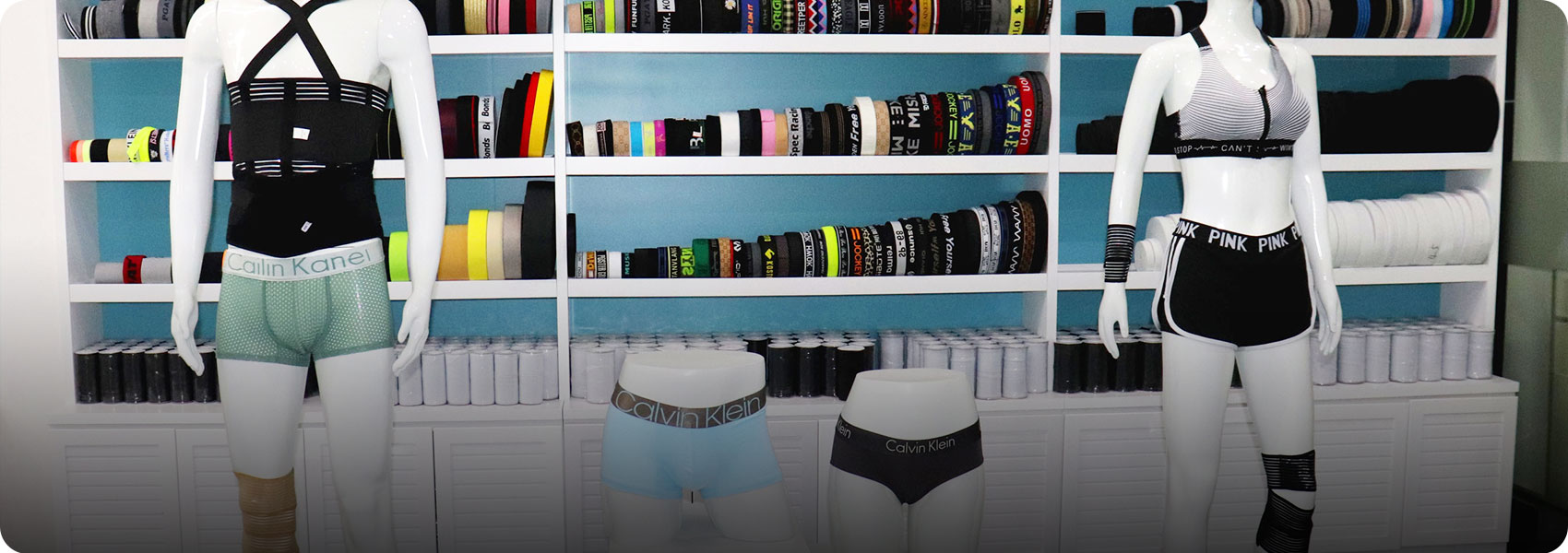
The versatility of mesh elastic materials has expanded its use across multiple sectors. In hygiene products, it is widely applied in diaper waistbands and leg cuffs for improved fit and comfort. In medical disposables, it supports masks, isolation gowns, and protective covers where breathability is essential. Apparel manufacturers also adopt it for sportswear and lightweight garments that require flexible movement without tight compression. Buyers searching for “soft stretch elastic for disposable medical wear” or “breathable elastic tape for garment finishing” are typically seeking solutions that balance softness with structural integrity.
Customization, OEM Support, and Industrial Requirements
Global B2B buyers increasingly expect tailored solutions rather than standard specifications. Width customization, color matching, stretch ratio adjustment, and packaging formats are now standard OEM requests. For a manufacturer, the ability to fine-tune a Mesh Elastic Band for different end-use scenarios is a competitive advantage. Production teams often collaborate with clients during sampling stages to optimize elasticity curves and bonding compatibility with nonwoven or fabric substrates. This collaborative approach reduces downstream defects and improves production efficiency for high-volume orders.
Quality Stability and Supply Chain Reliability
Consistency remains one of the most important decision factors in sourcing elastic components. Buyers often evaluate suppliers based on batch-to-batch stability, roll uniformity, and delivery reliability. In high-speed manufacturing, even small deviations in elastic tension can lead to significant product waste. Therefore, controlled production environments and continuous testing are essential. A well-manufactured Mesh Elastic Band ensures stable performance across different humidity and temperature conditions, supporting uninterrupted production lines and predictable final product quality.
As global demand continues to evolve toward comfort-oriented and high-efficiency disposable products, Mesh Elastic Band remains a critical material choice for manufacturers seeking reliability, adaptability, and end-user comfort in competitive international markets.

-
Tel:
+86-18767935551
+86-18395959909
+86-18767935551
-
Email:
saijia@sjelasticband.com
claiejin@sjelasticband.com
luffy@sjelasticband.com
-
ADD:
3F, Building 6, No.151, Huasheng Road, niansanli Street, Yiwu City, Jinhua City, Zhejiang Province, China.
LEAVE A REQUEST
AND WE'L CONTANT YOU.
AND WE'L CONTANT YOU.
Copyright © Yiwu Saijia Garment Accessories Co., Ltd. All rights reserved.
Custom Elastic Bands
